Fong, Gottheimer Introduce Bipartisan Bill to Strengthen U.S. Cybersecurity
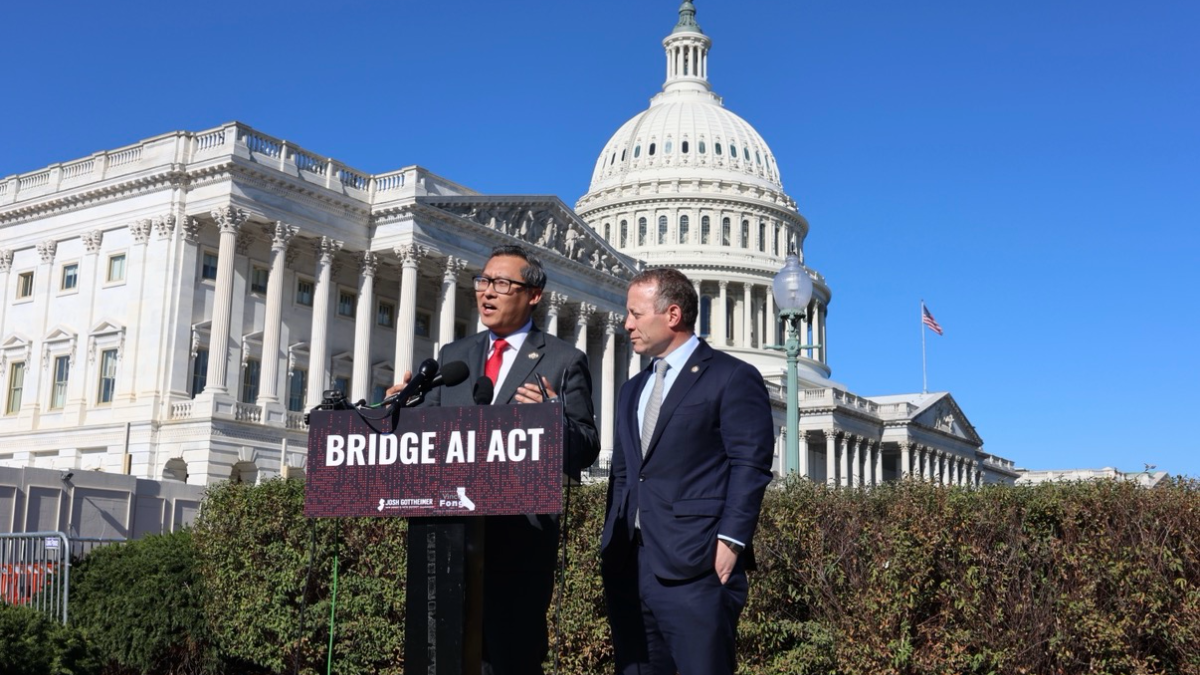
WASHINGTON, D.C. – Today, Congressmen Vince Fong (CA-20) and Josh Gottheimer (NJ-05) introduced H.R. 11055, the Bridging Resources for Innovative Defense and Government Expertise in Artificial Intelligence (BRIDGE AI) Act. This bipartisan legislation would authorize the Cybersecurity and Infrastructure Security Agency (CISA) to collaborate with experienced private-sector artificial intelligence (AI) professionals to better defend U.S. critical infrastructure.
“Communities and critical industries across the country are trying to keep up with the surge in AI-driven cyberattacks that steal sensitive data and disrupt operations,” said Congressman Fong. “In the Central Valley, cyberattacks have increasingly targeted schools, hospitals, and water systems, threatening the critical services our communities depend on. These attacks are becoming more frequent and sophisticated. These threats are real, and they aren’t waiting for the government to catch up. By bringing in AI and emerging technology specialists from the private sector, the BRIDGE AI Act ensures our nation’s cybersecurity experts receive the additional tools and expertise needed to modernize our systems, address vulnerabilities, and protect the essential services Americans rely on.”
“Our adversaries are using AI to attack our networks faster than ever, and CISA, the agency on the front lines of defending them, doesn’t have enough capacity to keep pace,” said Congressman Josh Gottheimer (NJ-5). “The BRIDGE AI Act is a commonsense, bipartisan fix that gives CISA a fast way to bring in the best AI and tech minds to hunt down intruders, patch vulnerabilities, and stress-test AI tools before they are exploited. Protecting our families, our water systems, and our national security shouldn’t be a partisan issue, and I’m proud to partner with Congressman Fong to get this done.”
Specifically, the bill:
- Creates a mission-focused pilot program for 75 - 125 private-sector professionals to serve within CISA.
- Supports structured knowledge transfer so that career CISA employees gain advanced AI expertise.
- Ensures rigorous ethics and conflict of interest safeguards.
- Requires a semiannual report to Congress on program status, participation, and recommendations for improvement.
Background
CISA leads national efforts to defend against emerging cyber threats by working with federal agencies, state, local, tribal, and territorial governments, and private-sector partners to protect America’s 16 critical infrastructure sectors.
In April, Congressman Fong hosted a cybersecurity roundtable with Homeland Security Committee Chairman Andrew Garbarino, CISA, regional military installations, local officials, and infrastructure sectors. The discussion focused on current, existing, and future cybersecurity challenges facing the Central Valley, developing a local workforce ready to combat cybersecurity threats, and protecting utility providers, local governments, and their infrastructure from cyberattacks. You can learn more about the roundtable here.
Recent examples highlighting how the cyber threat environment is escalating include:
- February 2026: A ransomware attack on the University of Mississippi Medical Center (UMMC) forced the closure of all 35 clinic locations statewide and the cancellation of scheduled appointments and elective surgeries. The attack took down UMMC's IT network, including its EPIC electronic medical records system.
- May 2026: Instructure, the provider of the popular Canvas education system, suffered a massive data breach orchestrated by the ShinyHunters cybercriminal group. The historic breach exposed student names, IDs, and private communications, ultimately forcing Instructure to pay a ransom to prevent a catastrophic data leak.
- July 2026: A suspected Iran-linked cyber group, CyberAv3ngers, executed a wave of cyberattacks that disrupted municipal water operations across at least 12 states, targeting more than 30 municipal water systems in Minnesota alone.
- October 2026: a cyberattack on the University of New Mexico Health Sciences Center forced New Mexico’s only Level I trauma center to divert ambulances and halted outpatient surgeries and appointments, disrupting access to emergency care.
- Just this week, a cyberattack compromised 178 of the world’s most visited websites, including those belonging to Zoom, HSBC, Equifax, CNN, Salesforce, and IKEA, in an effort to steal cryptocurrency and infect iPhones.
AI is fundamentally reshaping the cyber battlefield, identifying weaknesses, analyzing systems, and accelerating cyber operations at a speed that was unimaginable just a few years ago. As our adversaries gain access to these capabilities, we must ensure federal agencies like CISA have the most advanced tools available to protect our critical infrastructure. By partnering our nation’s cyber defense agency with AI experts from the private sector, CISA can help communities strengthen their defenses, stay ahead of emerging risks, and keep our critical infrastructure secure and resilient.
Today, Rep. Fong and Rep. Gottheimer hosted a press conference to announce the introduction of the legislation. Click here to watch.
Text of the BRIDGE AI Act can be found here.
###